

CMB Cars – Car Rental in Dakhla, Morocco
Morocco is one of the easiest countries in North Africa to explore by car, and for a lot of travelers that’s exactly the appeal. You land, you pick up your keys, and within an hour you’re already driving toward the coast, the mountains, or the desert instead of waiting around for a bus schedule that doesn’t match your plans. Driving in Morocco as a tourist is completely normal and thousands of visitors do it every month, but it does come with its own rules, habits, and small surprises that are worth knowing before you get behind the wheel.
This guide walks through everything a first time visitor needs: what license you actually need, how the traffic rules work in practice, what happens at police checkpoints, the road hazards nobody warns you about, and what changes specifically once you’re driving further south toward Dakhla. By the end you’ll know exactly what to expect, so the only thing left to plan is where you’re actually going.
Do You Need an International Driving License to Drive in Morocco
This is usually the first question people ask, and the honest answer is: it depends on where your license comes from.
If your national driving license is written in Latin characters, meaning English, French, Spanish, German, Italian, or similar, Morocco generally accepts it on its own for the length of a normal tourist visit. Most European, American, Canadian, Australian and UK licenses fall into this category, and travelers coming from those countries can usually rent a car and drive with nothing more than their regular license and passport.
That said, almost every car rental company in Morocco, CMB Cars included, will still recommend traveling with an International Driving Permit alongside your regular license. Here’s why that matters in practice. An IDP is essentially a translated version of your license into several languages, including Arabic and French. It doesn’t replace your real license, but it makes life a lot easier at checkpoints, at the rental desk, and in the rare situation where an officer isn’t familiar with the license format from your specific country. It removes any ambiguity, and ambiguity is exactly what you want to avoid when you’re standing on the side of a road with a police officer.
Which License Types Actually Need an IDP
If your license is written in a non Latin script, for example Arabic script from certain countries, Cyrillic, Chinese, or similar, an International Driving Permit becomes effectively mandatory. Without it, staff and officers simply won’t be able to read your name, license number, or category, and that creates unnecessary friction that’s easy to avoid.
Even if your license is in Latin script, if you’re planning a longer stay, a longer road trip, or you’ll be driving through more rural checkpoints on your way south, having the IDP in your glovebox is just one less thing to worry about.
Where and When to Get an IDP Before You Travel
This part is important: you cannot get an International Driving Permit once you’re already in Morocco. It has to be arranged in your home country before you fly out. In most places this is handled through your national motoring association. In the US that’s the AAA, in the UK it’s the AA or RAC, and most European countries have an equivalent body, usually linked to the national automobile club. The process is quick, usually takes a few days, costs relatively little, and the permit is typically valid for one year. If you know your travel dates, it’s worth sorting this out two to three weeks in advance just to be safe.
Morocco’s Basic Driving Rules
Once you’re on the road, Morocco drives on the right hand side, same as most of Europe and North America, so the actual mechanics of driving will feel familiar almost immediately. The traffic laws themselves are also fairly standard, but there are a handful of local specifics that catch first time visitors off guard.
Speed limits. In cities and towns the limit is generally 60 km/h. On national roads connecting towns it jumps to 100 km/h. On the toll autoroute network, the fast, modern highways connecting cities like Casablanca, Marrakech, and Agadir, the limit rises to 120 km/h. Speed cameras and radar checks do exist, particularly around town entrances, so it really is worth slowing down as soon as you see a village sign, even if the road still looks empty.
Seatbelts. Mandatory for the driver and every passenger, front and back. This is enforced, and it’s simply good practice regardless of the law.
Phone use. Using a handheld phone while driving is illegal in Morocco, the same as in most countries, and officers do watch for it, especially in cities.
Roundabouts. Traffic already circulating inside the roundabout generally has the right of way over traffic entering it. In theory this mirrors most European systems. In practice, not every local driver follows this cleanly, so treat roundabouts with a bit more caution than you might at home, and don’t assume everyone will yield just because the rule says they should.
Tolls. The autoroute network is a paid toll road, and it’s genuinely one of the more pleasant driving experiences in the country: smooth tarmac, clear signage, and far fewer surprises than rural roads. Keep some cash or a card in the car for the toll booths, since not every gate accepts every payment method.
Fuel and gas stations. Along major routes fuel stations are frequent and easy to find. Once you get off the main highways, especially heading into rural or desert regions, they become noticeably more spread out, which is something we’ll come back to in the Dakhla section below.
What to Expect at Police Checkpoints (Gendarmerie)
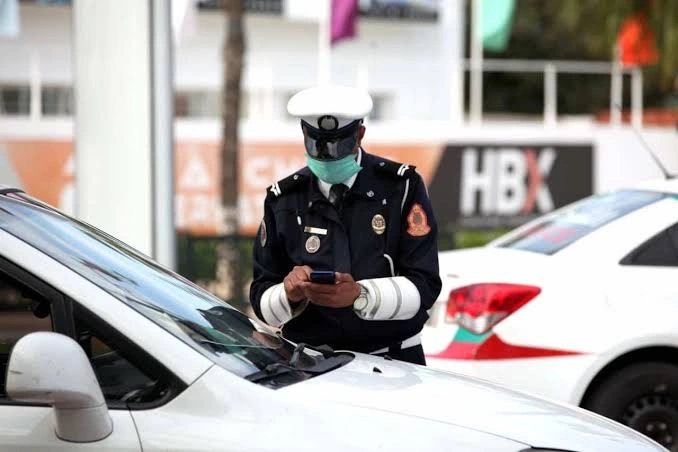
If there’s one thing that surprises tourists more than anything else, it’s how often you’ll pass through police checkpoints while driving in Morocco. This is run by the Gendarmerie Royale, and it is a completely normal, routine part of road safety and documentation in the country. It is not a sign that something is wrong, and it’s not something to be nervous about.
What Documents You Should Always Have Ready
Keep these within easy reach, ideally in the door pocket or glovebox rather than buried in your bag:
- Your national driving license, plus your International Driving Permit if you have one
- Your passport
- The rental agreement, which also acts as proof that you’re legally allowed to be driving that specific vehicle
- Proof of insurance, which is usually already included in your rental paperwork from the company you booked with
What Officers Typically Ask For
Most checkpoint stops are short and simple. An officer will ask for your license and the car’s registration or rental papers, and sometimes they’ll ask casually where you’re coming from and where you’re headed. This is standard, especially in border areas, coastal routes, and the southern regions of the country where checkpoints tend to appear more frequently.
Checkpoint Etiquette That Actually Helps
Slow down well before you reach the checkpoint, even if it looks quiet. Roll your window down before the officer reaches your car rather than after. A simple greeting goes a long way, even just a smile and a hello. Hand over your documents when asked, stay relaxed, and answer questions honestly and briefly. The overwhelming majority of stops are finished within a minute or two once your paperwork checks out, and most officers are simply doing routine work, not looking for a problem.
Common Road Hazards in Morocco That Nobody Warns You About
A few things that aren’t always obvious to visitors coming from countries with more predictable, well signposted roads.
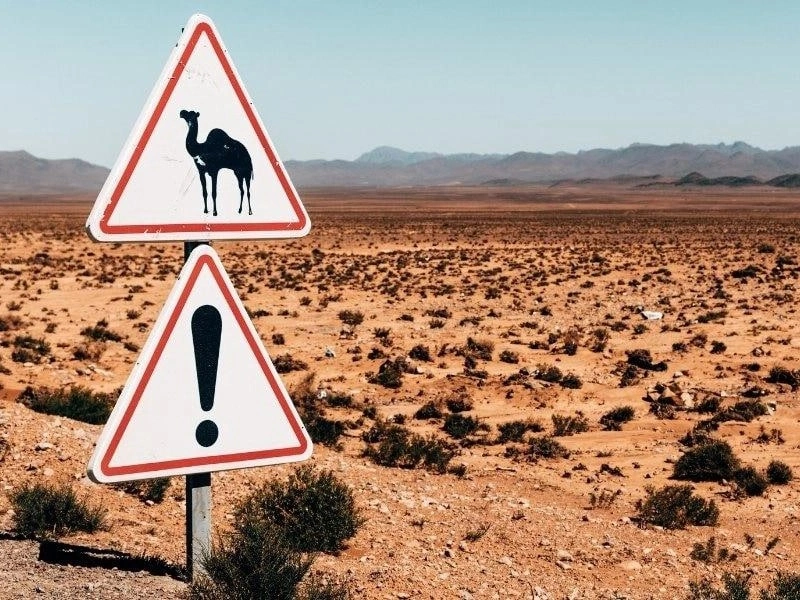
Livestock on the road. Sheep, goats, and the occasional donkey do wander onto rural roads, sometimes with almost no warning, especially near farming villages. Slow down whenever you’re passing through agricultural areas, and keep an eye on the shoulders of the road, not just what’s directly ahead of you.
Unmarked speed bumps. Many small towns and villages use speed bumps to slow traffic down, but the paint marking them often fades or was never there to begin with. Hitting one at speed is jarring and can genuinely damage a car. The safest habit is simple: any time you enter a populated area, ease off the gas well before you’d normally need to.
Night driving in rural areas. Once you leave the cities, street lighting basically disappears. Combine that with pedestrians walking along the road shoulder, unlit bicycles, and the occasional stray animal, and night driving on rural roads becomes noticeably harder than during the day. Where you can, plan your longer drives to finish before dark.
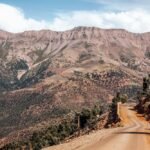
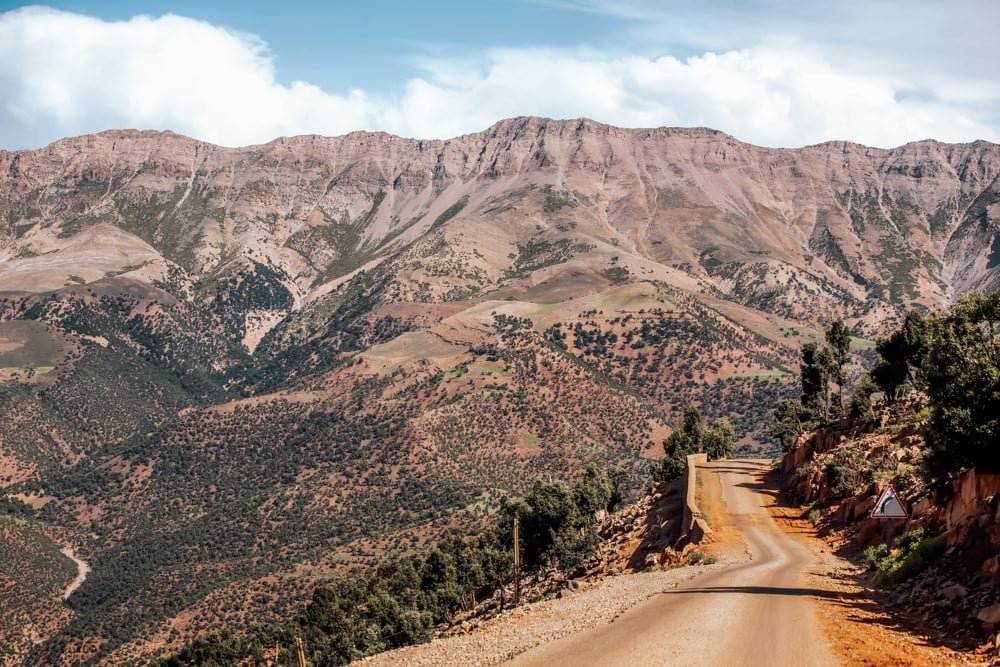
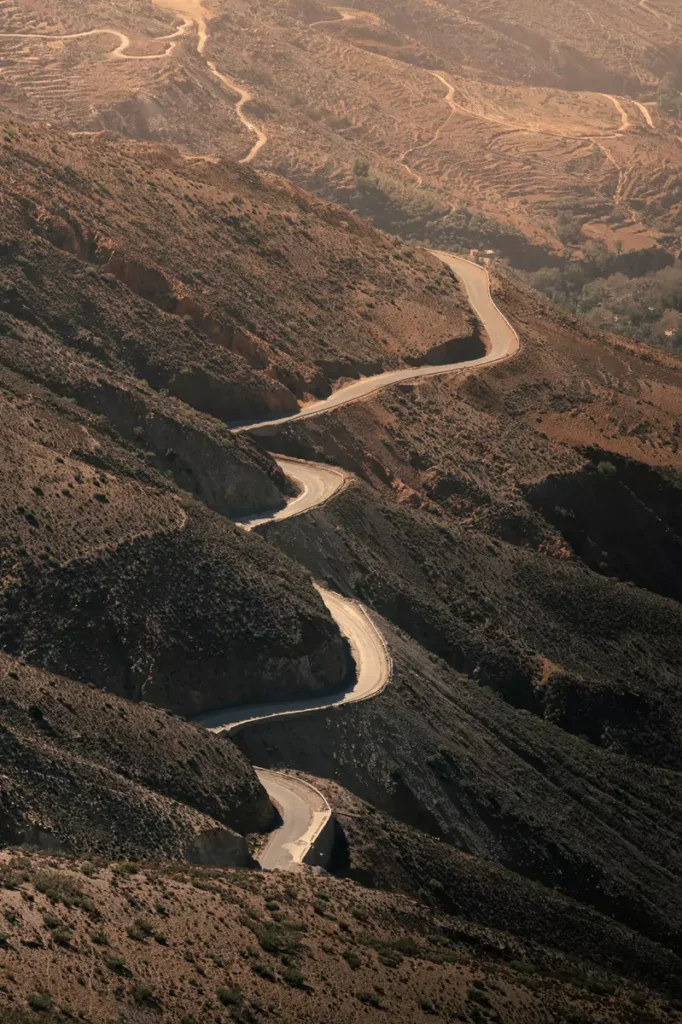
Mountain and desert road conditions. The Atlas mountain routes involve a lot of switchbacks and elevation change, which is beautiful but demands a well maintained vehicle and a driver who takes their time. In the desert regions further south, the challenge flips: instead of curves, you get long, exposed, straight stretches with very little around you, so a full tank of fuel and a car you trust matter more than ever.
Is It Actually Safe to Self Drive in Morocco
Yes, and this is worth saying plainly because a lot of guides dance around it. Driving in Morocco as a tourist is common, well established, and generally safe, as long as you drive defensively, respect the posted speed limits, and stay alert around towns, villages, and livestock crossings. The main roads connecting major cities are in good condition, and rental companies maintain their fleets specifically to handle both smooth highway driving and rougher regional roads.
The biggest adjustment for most first time visitors isn’t really about danger, it’s about pace. Moroccan traffic can feel a little less predictable than what you’re used to at home. Drivers may pass in situations you wouldn’t expect, mopeds weave through traffic in cities, and pedestrians cross where they need to rather than always at marked crossings. None of this makes the roads unsafe, it just means patience and lower speeds around populated areas will make your experience noticeably smoother.
Driving South Toward Dakhla: What’s Genuinely Different
The route heading south toward Dakhla and the wider Western Sahara region has its own rhythm, and it’s different enough from driving around Marrakech or Casablanca that it deserves its own section.
The first difference is checkpoint frequency. You will pass through more Gendarmerie checkpoints along this stretch than almost anywhere else in the country. This isn’t something to worry about. Officers along this route see tourists constantly, the process is routine, and most stops take barely a minute once you hand over your documents.
The second, more practical difference is distance. Between towns, the stretches are long, and fuel stations are spaced much further apart than what you’ll find in the north. This is the one thing that genuinely needs planning ahead. Fill up whenever you see a station, even if your tank isn’t empty yet, and don’t assume the next one is just around the corner the way it usually is elsewhere in Morocco.
This is exactly why the vehicle itself matters more on this route than almost anywhere else in the country. You want something dependable that can handle long, exposed distances without any surprises, not just a car that looks fine for driving around town. If you’re picking up your car directly at the airport, a reliable rental car in Dakhla makes that first stretch out of the city a lot less stressful, especially if you’re heading straight toward the lagoon or further into the desert on day one.
Frequently Asked Questions
Do I need an international driving license to drive in Morocco? Not always. A valid national license from most countries is accepted on its own. But if your license isn’t written in Latin script, or you simply want one less thing to worry about, getting an International Driving Permit before you travel is strongly recommended.
Is it legal for tourists to rent and drive a car in Morocco? Yes, completely. Tourists can legally rent and drive in Morocco with a valid license, and rental companies typically set a minimum age requirement, usually 21 and up, sometimes with a minimum number of years holding a license.
What should I do if I get stopped at a police checkpoint? Slow down early, stay relaxed, and have your license, passport, and rental documents within easy reach. Most stops are resolved in a minute or two once your paperwork is in order.
Are the roads heading south toward Dakhla safe to self drive? Yes. The main thing to plan for is fuel, since towns and stations are spaced further apart than in the north. Fill up whenever you get the chance rather than waiting until you’re low.
What’s the actual speed limit in Morocco, cities versus highways? Generally 60 km/h in towns and cities, 100 km/h on national roads between towns, and 120 km/h on the paid autoroute network, though posted signs always take priority over these general defaults.
Ready to Hit the Road
Once you’ve got your license sorted and you know what to expect on the road, the rest is easy. Browse our fleet of rental cars or check current rental prices for your trip, with airport pickup available and no hidden fees.


